
Epoxy garage floor systems
Garage Floor Coatings in San Antonio, TX
A coated garage that handles hot tires, dropped tools and afternoon sun through an open door.
- Free estimates at your property, where we measure and inspect the slab in person
- A moisture test on the concrete ahead of any coating
- Written quotes that list the surface prep and each coat by name
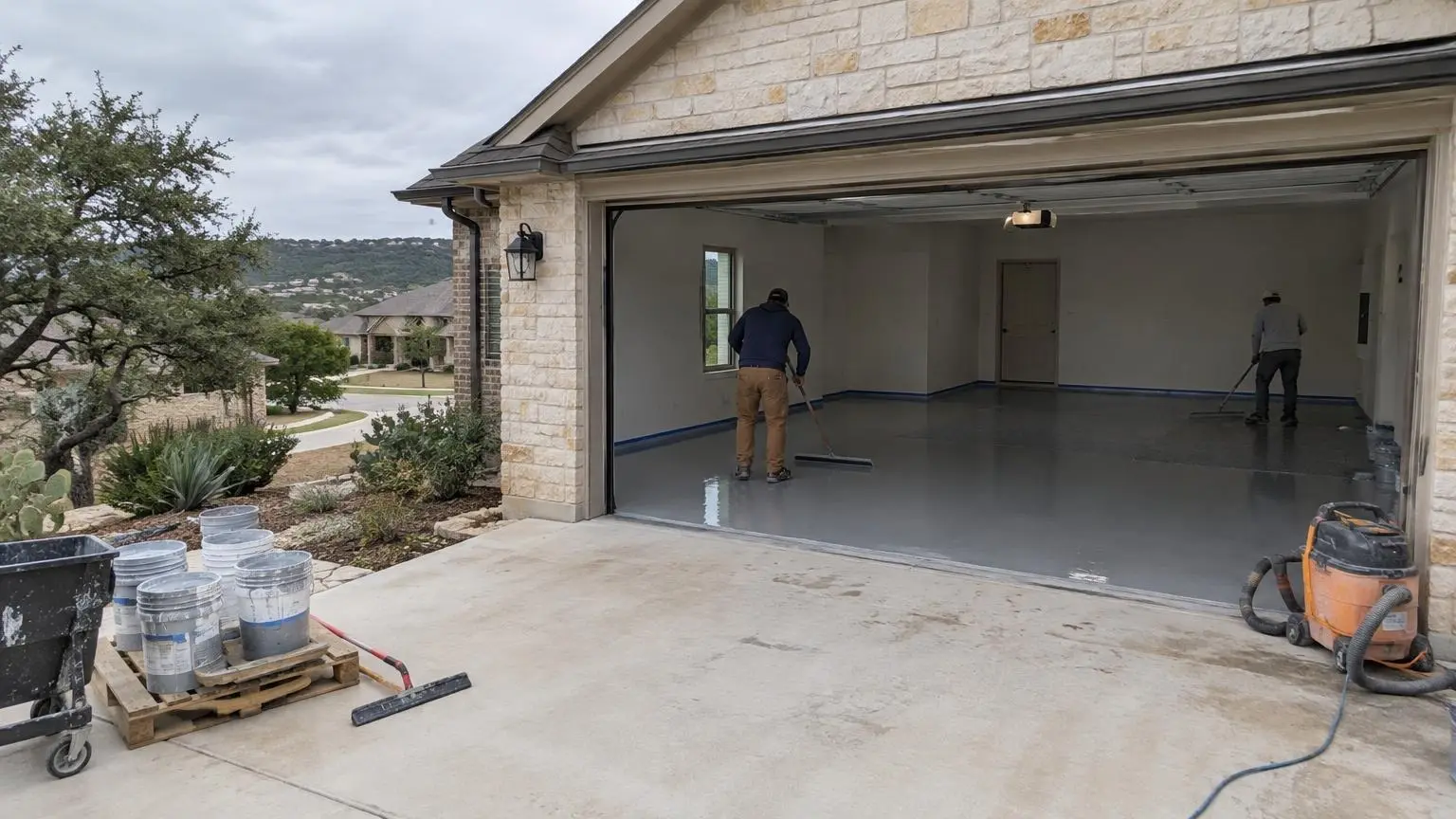
A Garage Floor Coating That Survives a Texas Summer
Garage floor coatings in San Antonio work harder than most people expect. The car you park after a July drive brings tires that have been rolling on pavement under highs that average about 95 degrees. The garage door faces the street and lets in strong sun for part of the day. In spring and fall, wet weeks can push moisture up through the slab. A good epoxy garage floor is built to deal with all three, and most of that comes down to how the concrete is prepared and which topcoat goes on last.
Why bare garage concrete wears out
Plain concrete is porous. Oil, transmission fluid, coolant and the salts in road grime soak in and leave stains that do not scrub out. The surface dusts as it ages, and that dust tracks into the house. Cracks open along the control joints and around the edges. A garage floor coating seals the surface, so a spill stays on the coating where a rag can take it, and it gives the room a bright, even floor that is easier to keep clean. For many San Antonio homes, the garage is also the workshop, the gym, the laundry room or the overflow storage space, so it gets a lot more traffic than a parking stall.
Hot tire pickup and how to avoid it
The complaint we hear most about cheap garage floor epoxy is that it peeled where the tires sit. That is called hot tire pickup. A hot tire softens a thin or weakly bonded coating, grips it, and pulls it away from the slab when the car backs out. One-part garage paints and kits rolled over etched or sealed concrete are the usual culprits. The fix is a coating that is bonded into ground concrete, built up to real thickness, and given a hard topcoat. It also means waiting the full cure before parking. HomeGuide notes that standard epoxy can need 2 to 7 days before you drive on it, while polyaspartic is ready much sooner.
The system we usually recommend
For most San Antonio garages we use a base coat of epoxy or polyurea, a full broadcast of vinyl flake, and a clear polyaspartic topcoat. The base gives bond and build. The flake hides dust and small marks, gives tires and shoes more bite on a damp floor, and lets you pick a color blend that suits the house. The polyaspartic topcoat is what keeps the floor from turning yellow where the sun comes through the door. On UV resistance, HomeGuide gives polyaspartic an excellent rating and plain epoxy only poor to fair, which matters a lot in a city with about 2,600 hours of sunshine a year. For a garage that will see heavy use or a vehicle lift, we may suggest a thicker base or a full-solids system.
Older garages and newer garages
San Antonio has housing from almost every decade, with a median build year of 1985 according to Census figures shown by Point2Homes. A garage from the 1960s or 1970s may have stains baked in, old paint, patched sections and cracks that have moved over the years. A newer garage may look clean, but its concrete is often dense and slick from the finishing trowel, with a curing compound that keeps primer from soaking in. Either way, we diamond grind the full floor, including the edges and the strip under the door seal, and we fill cracks and chipped joints before coating. In single-car garages and older detached garages, we also look at drainage and the slope toward the door.
When the garage is also a workspace
Plenty of San Antonio garages hold a bass boat on its trailer, a motorcycle, a golf cart, a home gym or a woodworking bench. Each of those changes the floor. Trailer jacks and kickstands press heavy loads into a few square inches. Rubber gym mats can trap heat and moisture. Spilled stain, gasoline and brake fluid need a topcoat that resists chemicals. At the estimate we find out what goes on in the garage and adjust thickness, flake size and topcoat to match. If you want a garage floor coating that looks good and is also a real work surface, say so and we will plan for it.
What it costs and how we quote
HomeGuide's garage floor coating guide shows epoxy at $4 to $10 per square foot, with polyaspartic at $5 to $12 per square foot. Its epoxy cost guide prices a two-car garage at roughly $1,600 to $5,800. Where your floor lands depends on the size, how much grinding and crack repair it needs, whether an existing coating must be stripped first, and which flake and topcoat you choose. We take measurements, run a moisture test and write one price that covers all of it. That written estimate is what you pay.
Living with the new floor
A coated garage is easy to keep up. Sweep or blow out dust and leaves, rinse it or go over it with a mop and gentle cleaner, and clean up drips as they appear. Lay a mat where the car drips after rain and a pad under kickstands and trailer jacks. Hot tires will not hurt a cured, well-bonded floor, but give it the full cure time before the first park.
What a Garage Coating Includes
Each part of the job, from bare concrete to the finished floor.
Moisture test
A reading on the slab before we quote, which decides between our regular primer and a moisture-tolerant one.
Diamond grinding
Grinding across the full floor, edges included, to open the pores and take off stains, paint, sealer and weak concrete.
Crack and joint repair
Cracks, pits and chipped control joints are filled, then ground level so the lines stay hidden under the coating.
Base coat
An epoxy or polyurea base that soaks into the ground concrete and builds the body of the floor.
Flake broadcast
Vinyl flake spread to full coverage for texture, color and help hiding dust and tire marks.
UV-stable topcoat
A clear polyaspartic topcoat that resists yellowing in sun and stands up to hot tires and chemicals.
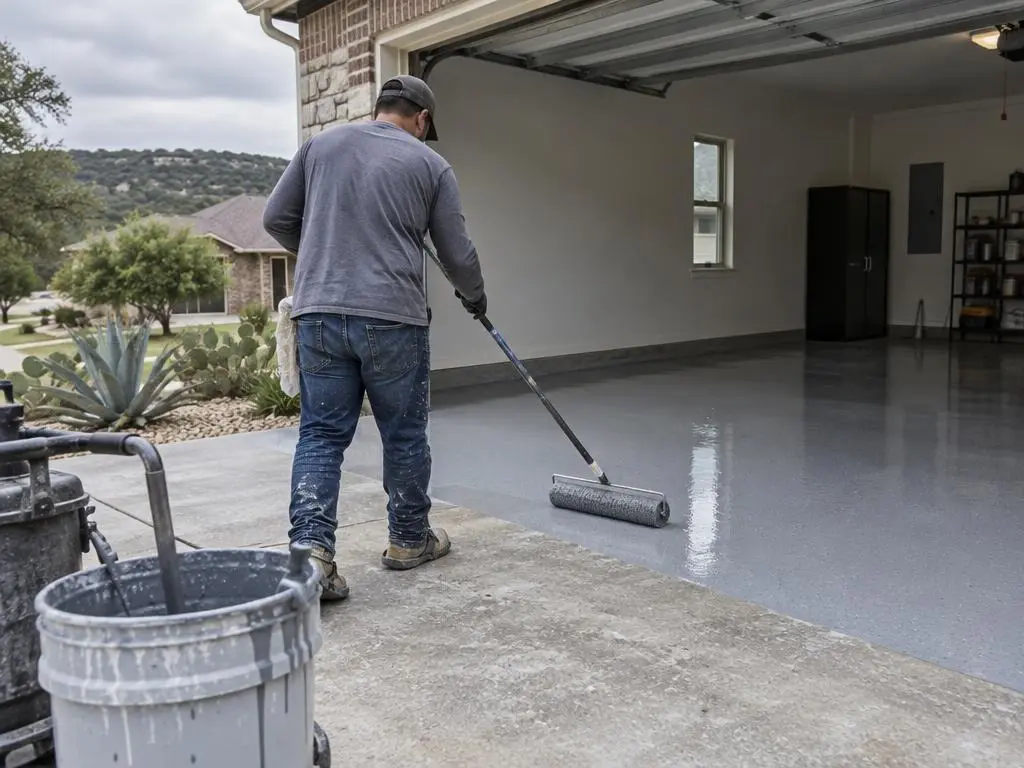
Typical Garage Floor Coating Costs
| Garage floor | Published range (source) |
|---|---|
| Epoxy, per sq ft installed | $4 to $10 (HomeGuide garage coating guide) |
| Polyaspartic, per sq ft installed | $5 to $12 (HomeGuide garage coating guide) |
| Polyurea, per sq ft installed | $5 to $10 (HomeGuide garage coating guide) |
| One-car garage, epoxy | $1,200 to $3,900 (HomeGuide epoxy guide) |
| Two-car garage, epoxy | $1,600 to $5,800 (HomeGuide epoxy guide) |
| Three-car garage, epoxy | $2,300 to $8,600 (HomeGuide epoxy guide) |
| Crack and chip patching | $25 to $250 (This Old House) |
These are national published ranges, not San Antonio quotes. Old coatings, crack repair, flake choice and topcoat all change the total. We price your garage after measuring and testing it, and the written estimate is the price.
How a Garage Coating Goes
1. Look and test
We take measurements, run a moisture test and write down stains, cracks, old coatings and how the garage gets used.
2. Written quote
You get the system, flake color, number of coats, repairs and cure times in writing.
3. Grind and repair
We grind the floor edge to edge, pull up the dust with a vacuum, then fill cracks and joints.
4. Coat
Base coat, flake broadcast, scrape and vacuum, then the clear topcoat, timed around slab temperature and dew point.
5. Cure and hand back
You get the times for foot traffic and for parking, and we walk the finished floor together.
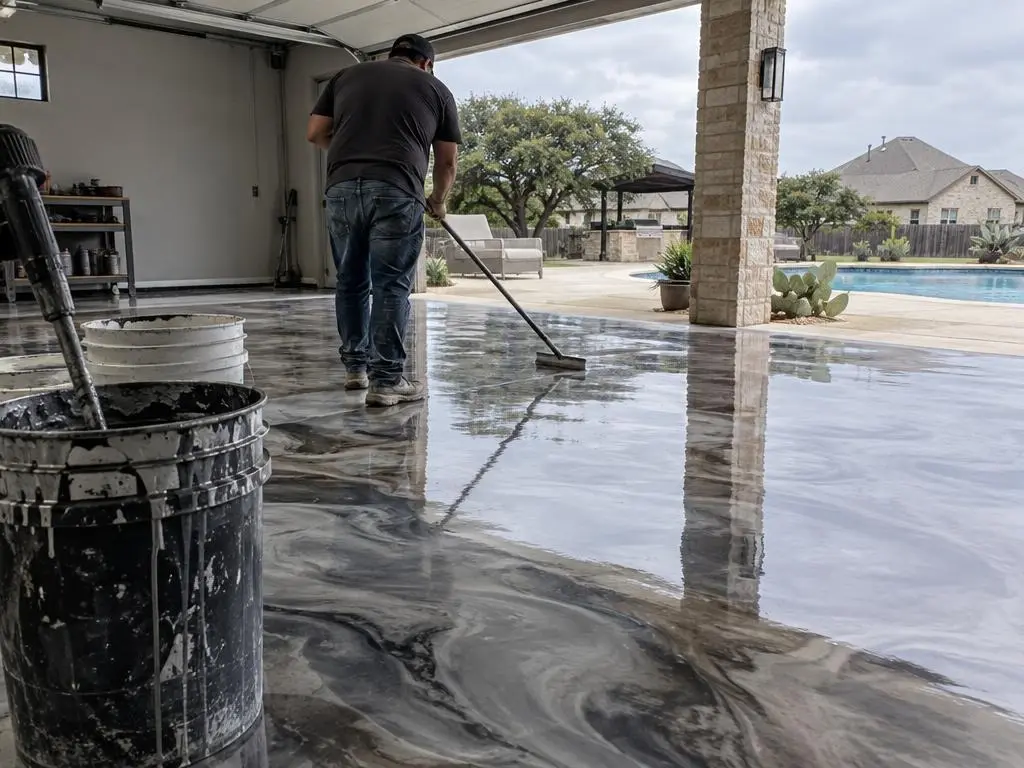
Why Choose Us for Garage Floor Coatings
Built against hot tire pickup
Ground concrete, real film thickness and a hard topcoat, not a rolled-on paint.
Sun-safe finish
Polyaspartic topcoats where daylight reaches, so the floor near the door does not yellow.
Prep in writing
Grinding, crack repair and any coating removal are listed, not buried.
Garage Floor Coatings Questions
When can the car go back on a freshly coated garage floor?
That comes down to the system. Per HomeGuide, standard epoxy may need 2 to 7 days before driving, while polyaspartic is usually ready for vehicles in about 24 to 48 hours. We give you the exact times for your floor in the quote.
Can you coat over the paint or epoxy that is already on my garage floor?
Usually not. If an old coating is peeling anywhere, it will keep peeling under the new one. We grind off loose or failing coatings and price that removal in the quote.
Will a flake garage floor be slippery when wet?
The flake itself gives texture, and a fine grit mixed into the clear coat adds more traction. That helps at the door, where blowing rain and wet tires come in.
Does a pro garage floor coating beat a DIY kit?
DIY kits run $200 to $700 in HomeGuide's numbers, and they can look fine at first. Most kits skip grinding and go on thin, which is why they tend to peel where hot tires sit. A professional system costs more because of the prep and thickness.
What colors can I choose?
Flake comes in many blends, from light grays and tans to darker mixes. Lighter blends show less dust and feel cooler in a sunny garage. We bring samples to the estimate.
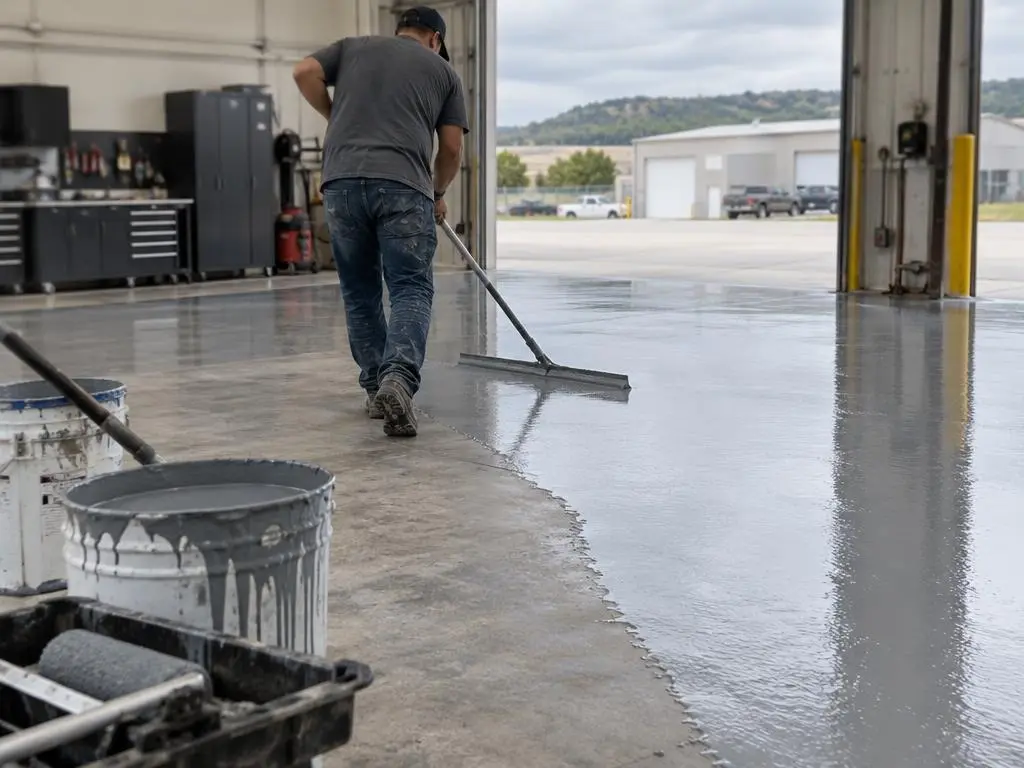
Garage Floor Coatings Service Areas
- Epoxy Flooring in San Antonio, TX
- Epoxy Flooring in Alamo Heights, TX
- Epoxy Flooring in Terrell Hills, TX
- Epoxy Flooring in Olmos Park, TX
- Epoxy Flooring in Shavano Park, TX
- Epoxy Flooring in Hollywood Park, TX
- Epoxy Flooring in Helotes, TX
- Epoxy Flooring in Leon Valley, TX
- Epoxy Flooring in Converse, TX
- Epoxy Flooring in Live Oak, TX
- Epoxy Flooring in Universal City, TX
- Epoxy Flooring in Schertz, TX
- Epoxy Flooring in Cibolo, TX
- Epoxy Flooring in Selma, TX
- Epoxy Flooring in Garden Ridge, TX
- Epoxy Flooring in New Braunfels, TX
- Epoxy Flooring in Boerne, TX
- Epoxy Flooring in Fair Oaks Ranch, TX
- Epoxy Flooring in Castle Hills, TX
- Epoxy Flooring in Windcrest, TX
- Epoxy Flooring in Kirby, TX
- Epoxy Flooring in Timberwood Park, TX
- Epoxy Flooring in Bulverde, TX
- Epoxy Flooring in Seguin, TX
Get a Garage Floor Coatings Estimate
Free garage estimate with a moisture test and a written price.